A reliable clevis hanger size chart is essential for any professional involved in safe and efficient pipe installation. This guide provides the definitive resource for understanding pipe support systems, offering updated 2026 data to explain everything from reading dimensions to calculating load capacity. With this information, you can confidently select the perfect clevis hanger to ensure your project’s structural integrity and long-term performance.
Understanding the Basics: What is a Clevis Hanger?
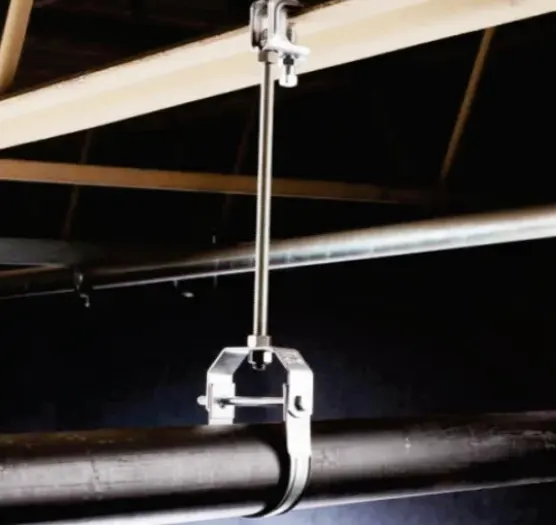
A clevis hanger is a foundational component in pipe support systems, designed to suspend non-insulated, stationary horizontal pipelines from above. It provides a secure, pivoting connection point that accommodates pipe movement and ensures stability. It is a go-to choice for plumbing, HVAC, and fire protection systems due to its simplicity and reliability.
The Core Components of a Clevis Hanger
Understanding the anatomy of a clevis hanger is the first step in selecting the correct one from a clevis hanger size chart. Its design is straightforward but effective:
- The Clevis: A U-shaped metal piece with holes at the top to connect to a threaded hanger rod.
- The Lower Strap/Saddle: The bottom piece that cradles the pipe, providing support.
- The Clevis Pin: A pin or bolt that connects the clevis and the lower strap, creating a pivot point. The pin’s sizing is crucial for bearing the load.
In some installations, the clevis hanger is used alongside a channel bracket to distribute load and ensure a secure connection to overhead structural elements.
Common Clevis Hanger Materials and Finishes
The material and finish determine a hanger’s durability and suitability for different environments. Choosing the right one prevents corrosion and ensures a long service life.
Material/Finish | Common Use Case | Key Benefit |
Carbon Steel (Plain) | Dry, indoor environments with no corrosion risk. | Most cost-effective option. |
Electro-Galvanized Steel | Indoor applications where minor moisture may be present. | Provides a thin layer of zinc for basic corrosion resistance. |
Hot-Dip Galvanized Steel | Outdoor and corrosive environments (e.g., industrial plants, coastal areas). | Offers superior, thick-layer corrosion protection. |
Stainless Steel | Highly corrosive or sanitary environments (e.g., chemical plants, food processing). | Excellent resistance to rust and chemical corrosion. |
How to Read and Use a Clevis Hanger Size Chart
Decoding Key Columns: Nominal Pipe Size, Max Load, and Dimensions
To master the clevis hanger size chart, follow these steps:- Find the Nominal Pipe Size (NPS): Locate the row corresponding to the pipe size you are supporting (e.g., 2″, 4″, 6″).
- Check the Maximum Recommended Load: This is the most critical column. It specifies the clevis hanger load capacity in pounds or kilograms. Always ensure your calculated load is below this value.
- Identify the Hanger Rod Size: This column tells you the required diameter of the threaded rod needed to suspend the hanger (e.g., 3/8″, 1/2″).
- Review Key Dimensions: Look for other measurements like ‘Center of Pipe to Top of Hanger’. These clevis hanger dimensions are vital for planning installation height and ensuring clearance.
Understanding Pipe OD vs. Nominal Pipe Size (NPS)
A common point of confusion for newcomers is the difference between NPS and the actual Outer Diameter (OD) of a pipe. They are not the same. For example, a 2-inch NPS pipe has an actual OD of 2.375 inches. Clevis hangers are sized by NPS to simplify the selection process, matching the hanger to the standard pipe name rather than a precise measurement. This standardization is key to comparing various pipe hanger sizes.
The Comprehensive Clevis Hanger Size Chart (Standard Dimensions)
Chart for Standard Steel Pipe (Schedule 40)
This sample standard clevis hanger chart covers common pipe hanger sizes.| Nominal Pipe Size (NPS) | Max Recommended Load (lbs) | Hanger Rod Size (in) | Center of Pipe to Top of Hanger (in) |
| 1/2″ | 610 | 3/8 | 1-7/8 |
| 1″ | 610 | 3/8 | 2-1/4 |
| 2″ | 730 | 1/2 | 3-1/8 |
| 3″ | 1130 | 5/8 | 4-1/4 |
| 4″ | 1550 | 3/4 | 5-1/4 |
| 6″ | 2300 | 7/8 | 7-1/4 |
| 8″ | 3260 | 1 | 9-1/2 |
| 10″ | 3800 | 1-1/8 | 11-1/2 |
| 12″ | 4500 | 1-1/4 | 13-1/2 |
Considerations for Insulated Pipe Support
When using a clevis hanger for pipe support with insulation, you must account for the increased overall diameter. The insulation adds bulk, requiring an oversized clevis hanger or the use of a pipe shield (or saddle) to protect the insulation from being crushed. Importantly, the weight of the insulation and any protective shield must be added to your total load calculation to ensure you do not exceed the hanger’s capacity.
These configurations are often part of a broader modular support system, which allows for customizable arrangements to suit complex mechanical layouts.
Critical Factors for Selecting the Right Clevis Hanger
Calculating and Verifying Clevis Hanger Load Capacity
Before consulting the clevis hanger size chart, calculate the total load your hanger must support. Use this simple formula: Total Load = (Weight of Pipe per foot x Span between Hangers) + Weight of Contents per foot + Weight of Insulation per foot After calculating the total load, apply a safety factor (consult project specifications, but 2.5 is common) and check that the final number is well below the clevis hanger load capacity listed on the chart.Why an Adjustable Clevis Hanger Might Be Necessary
In some situations, a standard hanger isn’t enough. An adjustable clevis hanger provides the ability to modify the elevation of the pipe after it has been installed. This is particularly useful for:
- Sloped Piping: Essential for gravity-flow systems like plumbing and drainage, where a precise slope must be maintained.
- Precise Alignment: Allows for fine-tuning the height of pipes to align with other equipment or connection points in complex mechanical systems.
The key benefit of an adjustable clevis hanger is its flexibility, which can save significant time and labor during installation and maintenance. When combined with a reliable pipe clamp support, it forms a complete, adjustable system that enhances installation efficiency.
Common Applications and Industry Standards
Using a high-quality clevis hanger for pipe support ensures compliance and safety. Industry standards are in place to guarantee performance and reliability across all manufacturers.
Adherence to MSS SP-58 Standards for Pipe Hangers
The Manufacturers Standardization Society (MSS) sets the industry benchmark for pipe supports with its SP-58 standard. This specification covers the material, design, fabrication, and inspection of pipe support components. When selecting a clevis hanger, look for products that are compliant with MSS SP-58. This ensures you are using a product that has been designed and tested to meet rigorous quality and safety requirements, a crucial factor for any clevis hanger for pipe support.
These standards are also essential for integrated systems like a strut support system, ensuring consistency and compatibility across all structural supports.
Insights on Quality from a Global Exporter: Ashish Exports
From Aromatic Chemicals to Industrial Components: A Commitment to Quality
Since 1982, Ashish Exports has built a legacy of quality, first in mint products and now as a leading global exporter of essential oils and aromatic chemicals. Our decades of experience in exporting diverse industrial goods, including rear-assemblies (HSN: 87141090) and bicycle spares (HSN: 87149990), has provided deep insights into material science and quality control. The quality of a hot-dip galvanized clevis hanger, for example, depends entirely on the chemical processes used for its coating. This commitment to quality at a foundational, chemical level is what defines a reliable product, whether it’s an essential oil or an industrial component. This same principle applies to understanding the fine details of clevis hanger dimensions and pipe hanger sizes.Frequently Asked Questions
Q1. What is the difference between a standard and an adjustable clevis hanger?
A standard hanger has a fixed height, while an adjustable one allows for vertical positioning changes after installation.
Q2. Can I use a clevis hanger for vertical pipe runs?
No, they are designed specifically for supporting horizontal, non-insulated stationary pipe runs.
Q3. What does MSS SP-58 mean in relation to clevis hangers?
It is a standard from the Manufacturers Standardization Society that sets the requirements for the design, material, and fabrication of pipe supports.
Q4. How much weight can a clevis hanger hold?
The weight capacity varies significantly by size and material; it is listed as the ‘Maximum Recommended Load’ on the size chart.
Q5. How do you measure a clevis hanger?
Hangers are not measured directly but are selected based on the Nominal Pipe Size (NPS) of the pipe they will support.
Q6. What size clevis hanger do I need for a 4-inch pipe?
You need a hanger designated for a 4-inch Nominal Pipe Size (NPS), which you can find on a clevis hanger size chart.

Meet Kriti Mittal, the brand storyteller at Ashish International, a global leader in sheet metal components and industrial fasteners. She specialises in turning technical expertise into engaging stories that highlight the company’s precision, quality, and product innovations. Passionate about manufacturing trends and clear communication, she connects global industries with Ashish International’s vision of performance, trust, and reliability.