
Trapeze Pipe Support | Strut Channel Installation
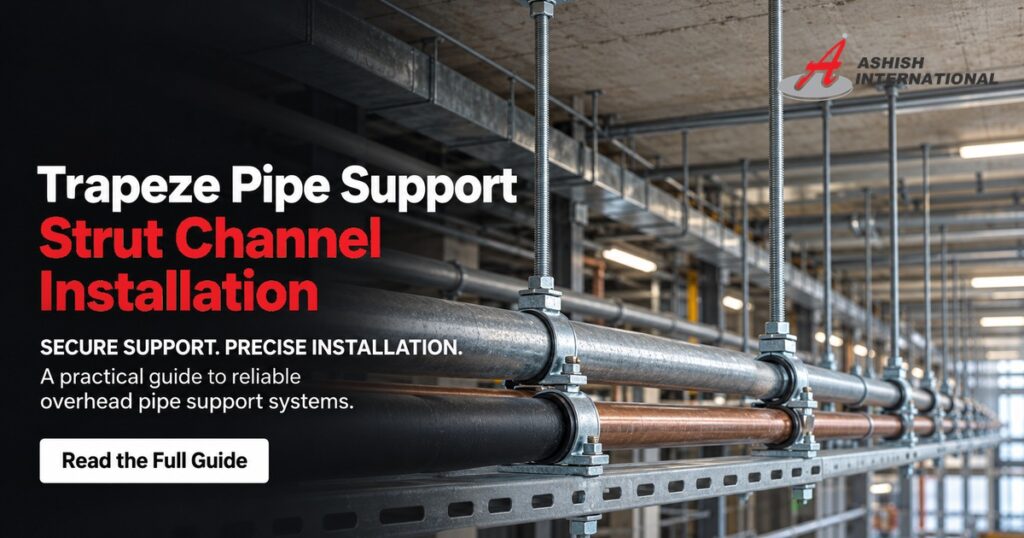
A trapeze pipe support strut channel installation is an effective way to suspend multiple pipes or ducts from a ceiling. It uses a horizontal length of strut channel supported by two threaded rods connected to the overhead structure, forming a frame that resembles a swing. Nuts and washers secure the channel to the rods, while pipe clamps hold individual pipes in position. Because a single trapeze can support multiple service lines, it can save overhead space and reduce the number of ceiling fixings compared with installing separate hangers for every pipe. This makes trapeze supports useful in plant rooms, corridors, and HVAC installations. Ashish International, with over 25 years of experience in MEP supports, supplies the strut channel, threaded rod, and clamps used in trapeze assemblies. This guide explains the main components, installation sequence, sizing considerations, and practices that help create a reliable support system. What a Trapeze Support Is and Why It’s Used A trapeze support is useful when several pipes or service lines run alongside one another and installing individual hangers would require more time, space, and fixing points. Instead, a horizontal channel carries multiple lines and is suspended from the overhead structure by threaded rods. This arrangement offers several practical advantages. It can help organise congested ceiling spaces, reduce the number of structural fixing points, and simplify installation by consolidating multiple services into one assembly. A properly designed trapeze can also distribute the combined load across its support points. However, the actual load distribution depends on the assembly design, pipe arrangement, and support conditions. Trapeze hangers are commonly used for mechanical, electrical, and plumbing services in commercial buildings, industrial facilities, and other projects with multiple overhead service lines. They are particularly useful when pipes run together and need an organised, accessible support arrangement. The Parts You Need A trapeze support consists of several standard components that work together to suspend and secure pipes. The main parts include: Strut channel: The horizontal member that carries the pipes. Its profile, gauge, and span must be selected according to the design loads. Two threaded rods: The vertical hangers that connect the channel to the overhead structure. Nuts and washers: The fittings used to position and secure the channel on the threaded rods. Pipe clamps: Pipe clamps or compatible channel clamps that secure each pipe to the channel. Ceiling fixings: Beam clamps for suitable steel structures or appropriate anchor bolts for concrete, selected according to the design and substrate. The channel profile and connection details have a major influence on the assembly’s capacity. Heavier loads or longer spans may require a deeper profile or a back-to-back strut channel. Select every component according to the calculated loads, span, support conditions, and compatibility requirements rather than relying on standard sizes alone. How to Install a Trapeze, Step by Step Installing a trapeze involves positioning the threaded rods, securing the channel, and attaching the pipes. The exact sequence and connection details should follow the approved installation drawings and the manufacturer’s instructions. Mark the rod positions: Identify the two suspension points based on the approved layout, channel length, and overhead structure. Fix the rods to the structure: Install each threaded rod using a suitable beam clamp on a compatible steel member or an approved anchor system in concrete. Position the lower nuts and washers: Install the specified nuts and washers on both rods at the required channel elevation. Fit the channel: Position the strut channel on the lower supports, ensuring that the rods and fittings engage correctly. Secure and level the assembly: Install the specified upper fittings and tighten the connections according to the manufacturer’s requirements. Check the channel alignment and level. Install the pipe clamps: Secure each pipe using compatible clamps, following the specified spacing and allowing the required access and movement. Levelling and connection checks are important, but they do not replace structural verification. An incorrectly designed or installed assembly can develop uneven loading, excessive deflection, or connection failure. Confirm that the completed support meets the approved design before placing it into service. Sizing the Trapeze to the Load The strut channel, threaded rods, connections, and overhead anchors must support the combined design load of all services carried by the trapeze. This includes the weight of the pipes, their contents, insulation, fittings, and any other applicable loads. The following table provides a general overview of how support configurations may vary with loading. It is not a structural sizing specification. Load Category Possible Channel Configuration Rod Size Considerations Light loads, such as small pipes or cable services Suitable 41×21 or 41×41 channel, subject to verification M8–M10 may be considered where calculations permit Medium loads, such as general MEP services Suitable 41×41 channel, subject to span and capacity checks M10–M12 may be considered where calculations permit Heavy loads, including larger or fluid-filled pipes Higher-capacity channel or a deeper profile M12–M16 may be considered where calculations permit Very heavy multi-pipe assemblies Engineered arrangement, potentially including back-to-back channels M16 or larger may be required, subject to verification Actual requirements can differ significantly from these examples. Channel capacity depends on the profile, material thickness, span, loading arrangement, connection details, and manufacturer-rated performance. Threaded rod capacity also depends on its grade, effective tensile area, unsupported length, and connection design. The load should account for the pipes in their operating condition, including their contents and insulation, as well as applicable dynamic, thermal, and other project-specific loads. Do not assume that each rod automatically carries exactly half the total load. Load distribution must be checked for the actual geometry and support conditions. A qualified designer should verify channel strength, deflection, rod tension, anchor capacity, and the supporting structure against the applicable design requirements. This is the same attention to engineering detail required for reliable MEP support structures. Best Practices That Prevent Problems Good installation practices help maintain the performance and service life of a trapeze support. Keep the following considerations in mind: Check alignment: Verify that the channel is level and the rods are correctly positioned before final tightening. Select